
SEAMLESS GUTTER SYSTEMS
Gutter Installation and Replacement in Monmouth County, NJ
A properly designed gutter system protects more than the edge of your roof. It directs rainwater away from the fascia, siding, foundation, walkways, and landscaping surrounding your home.
All Weather Roofing installs and replaces seamless gutters for New Jersey homes. We evaluate the roofline, drainage paths, downspout locations, and surrounding property so the finished system manages water effectively and complements the exterior.
PLANNED FOR THE PROPERTY
Effective drainage depends on the complete gutter system.
- Seamless gutters sized for the roofline
- Downspouts placed to manage water properly
- Correct pitch toward each drainage point
- Secure attachment to sound fascia
- Clean transitions around corners and roof sections
- Discharge directed away from the foundation
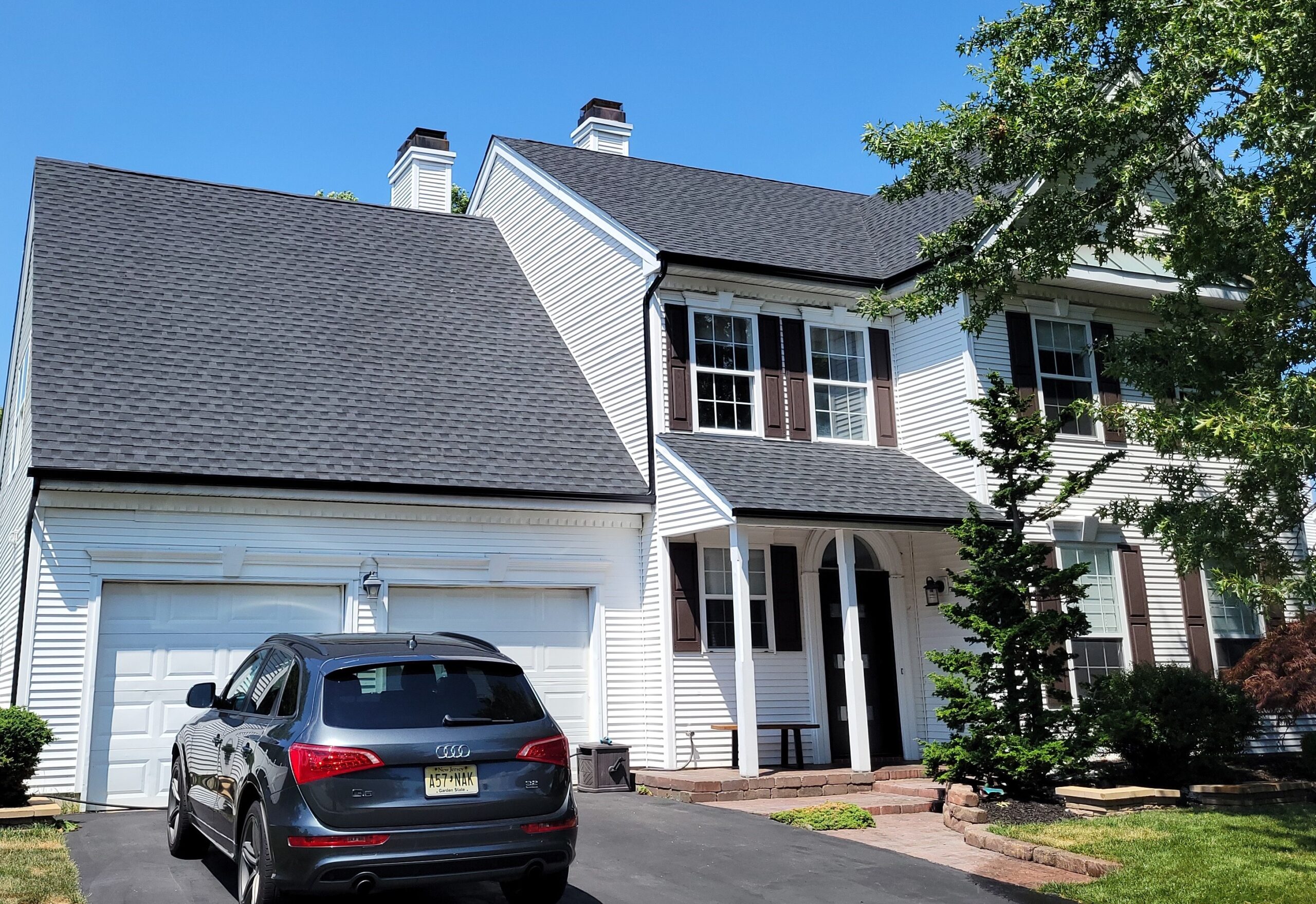
WATER MANAGEMENT MATTERS
Gutters Help Protect the Entire Exterior of Your Home
Rainwater leaving the roof needs a controlled path away from the house. When gutters overflow, leak, pull away from the fascia, or discharge too close to the building, water can affect several parts of the property.
A properly planned gutter system collects runoff along the roof edge and directs it through downspouts to appropriate discharge locations. The design should account for the roof area, valleys, lower roof sections, landscaping, walkways, and foundation surrounding the home.
- Reduce uncontrolled water flowing over fascia and siding
- Help limit erosion around landscaping and walkways
- Direct roof runoff away from the foundation
- Reduce concentrated water near entryways and lower roof areas
- Support the long-term performance of the roof edge
SIGNS TO WATCH FOR
When Should Gutters Be Repaired or Replaced?
Not every gutter problem requires a completely new system. A loose fastener, blocked outlet, or isolated leak may be repairable. Replacement becomes more practical when deterioration is widespread or the existing system cannot manage water reliably.
VISIBLE MOVEMENT
Sagging or Pulling Away From the Fascia
Gutters should remain securely attached and properly pitched. Sagging sections, loose fasteners, or gutters separating from the roof edge can prevent water from reaching the downspouts and may indicate damaged fascia or inadequate attachment.
REPEATED LEAKS
Cracks, Corrosion, and Failing Seams
Small isolated leaks may sometimes be sealed. Multiple leaking joints, visible corrosion, splitting, or recurring repairs often indicate that the gutter system is no longer providing dependable long-term drainage.
POOR DRAINAGE
Overflowing or Misplaced Downspouts
Frequent overflow may result from blockage, incorrect pitch, undersized gutters, limited outlets, or downspouts that cannot handle concentrated runoff. The cause should be identified before recommending replacement.
INSTALLATION DETAILS MATTER
A Gutter System Should Be Planned for the Home
Effective gutter installation involves more than fastening metal along the roof edge. The roofline, water volume, fascia condition, downspout locations, and discharge areas should be evaluated together.
Evaluate the Roofline
We review roof sections, valleys, inside corners, lower roofs, and other areas where water becomes concentrated during heavy rain.
Inspect the Fascia
The fascia should provide a suitable attachment surface. Visible deterioration or damaged areas should be identified before the new gutters are installed.
Set the Pitch and Outlets
Each gutter run must move water toward its outlets without creating low spots, standing water, or uncontrolled overflow along the roof edge.
Plan Downspout Discharge
Downspouts should carry runoff to practical discharge locations that help move water away from the foundation, entrances, and vulnerable landscaping.